Case study
Six languages, no interpreter booths
An enterprise technology group ran a regional summit with delegates from nine countries. Real-time dubbing carried every session into six languages at 2.4-second median latency, on our hardware at the venue.
The challenge
What was actually wrong
Interpreter booths for six languages across three parallel halls would have needed 36 interpreters and floor space the venue did not have. The client had also been burned by a cloud translation trial the year before, where a 40-second uplink drop silenced translation for an entire session.
Approach
How we sized it
We proposed dubbing on venue hardware rather than in the cloud, and said plainly that machine dubbing was the wrong answer for the two regulatory sessions — those kept human interpreters. That split cut interpreter count from 36 to 4 without pretending the technology covers cases it does not.
Deployment
What went on the floor
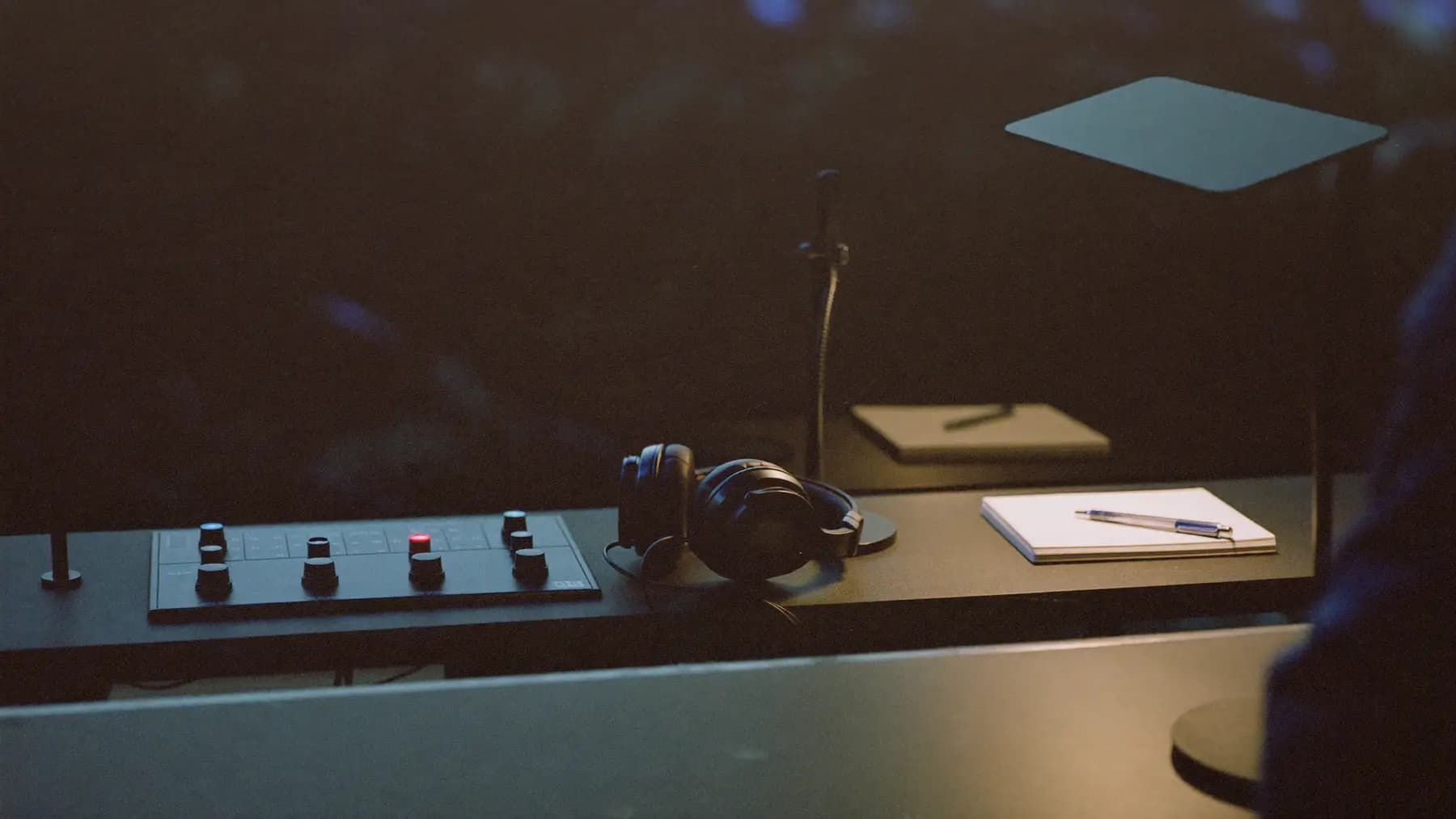
Two GPU nodes on site taking XLR from each hall's desk, delivering to delegate mobiles over our own network. Because the pipeline ran locally, a nine-minute venue uplink failure on day two affected the public stream but not a single delegate in the room.
Results
What we measured
Median dubbing latency
Target languages live
Delegates using a translated feed
More work
Other deployments
Let's build the room
Send us the date, the city and the headcount. We come back with sizing, staffing and a costed range.