Event Operations
The venue survey questions that decide whether your event works
Power, uplink, riser access and load-in windows. Four answers you need before signing, and what the wrong answer costs you later.
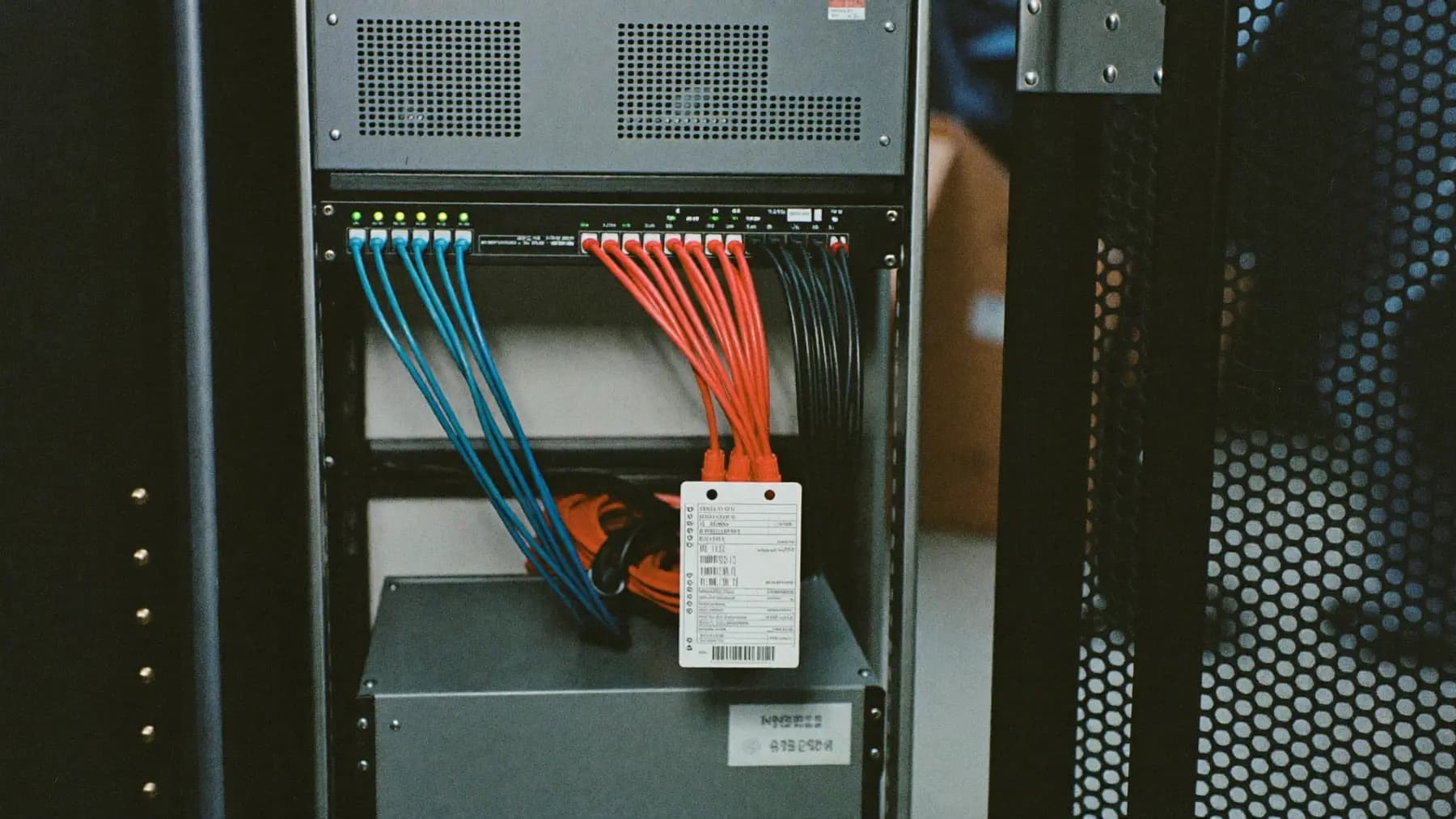
Hero art direction: Open network rack at a venue, patch panel dressed with coloured ethernet, UPS below. Cool rack light, amber LEDs.
The contract is signed before anyone technical sees the room
This is the ordinary sequence: sales negotiates the venue, the date is announced, and the technical team walks the space six weeks later. By then the problems that would have changed the decision are problems you have to engineer around instead.
A ninety-minute survey before signing costs almost nothing and routinely saves six figures.
Power: the question behind the question
Venues quote total available load, which is rarely the useful number. What you need is:
Where the distribution boards are, relative to where you need power. A hall with ample capacity at the back and nothing at the stage end means cable runs, which means matting, which means cost and a trip hazard to manage.
Whether it is single or three phase, and how it is balanced. Lighting and LED walls draw hard and unevenly. An unbalanced three-phase load trips protection at the worst moment.
What the backup actually is. "We have a generator" can mean an automatic transfer switch that catches a failure in milliseconds, or a unit somebody starts manually after ten minutes. Those are completely different events. Ask how it is tested and when it last ran under load.
Whether isolated supply is available for audio. Shared circuits with dimmers and motors put noise into audio. Retrofitting isolation is expensive; asking for it up front is free.
Uplink: two numbers, not one
Venue internet is quoted as a headline speed that describes the shared guest network. That number is close to useless for you.
What you need to know:
- Is a dedicated, unshared circuit available, and at what committed rate? Shared bandwidth means your streaming contribution feed competes with 2,000 delegates on Instagram.
- What is the upstream rate? Most venue connections are heavily asymmetric. You care about upload, and the brochure quotes download.
- Is there a second path from a different carrier, physically diverse? Two circuits down the same duct are one circuit.
- Who has admin access on the day, and what is their response time at 08:00 on a Sunday?
If the honest answers are poor, that is not a deal breaker. It is a bonded-cellular line item that needs to be in the budget rather than discovered in week five.
Load-in: the constraint that eats everything
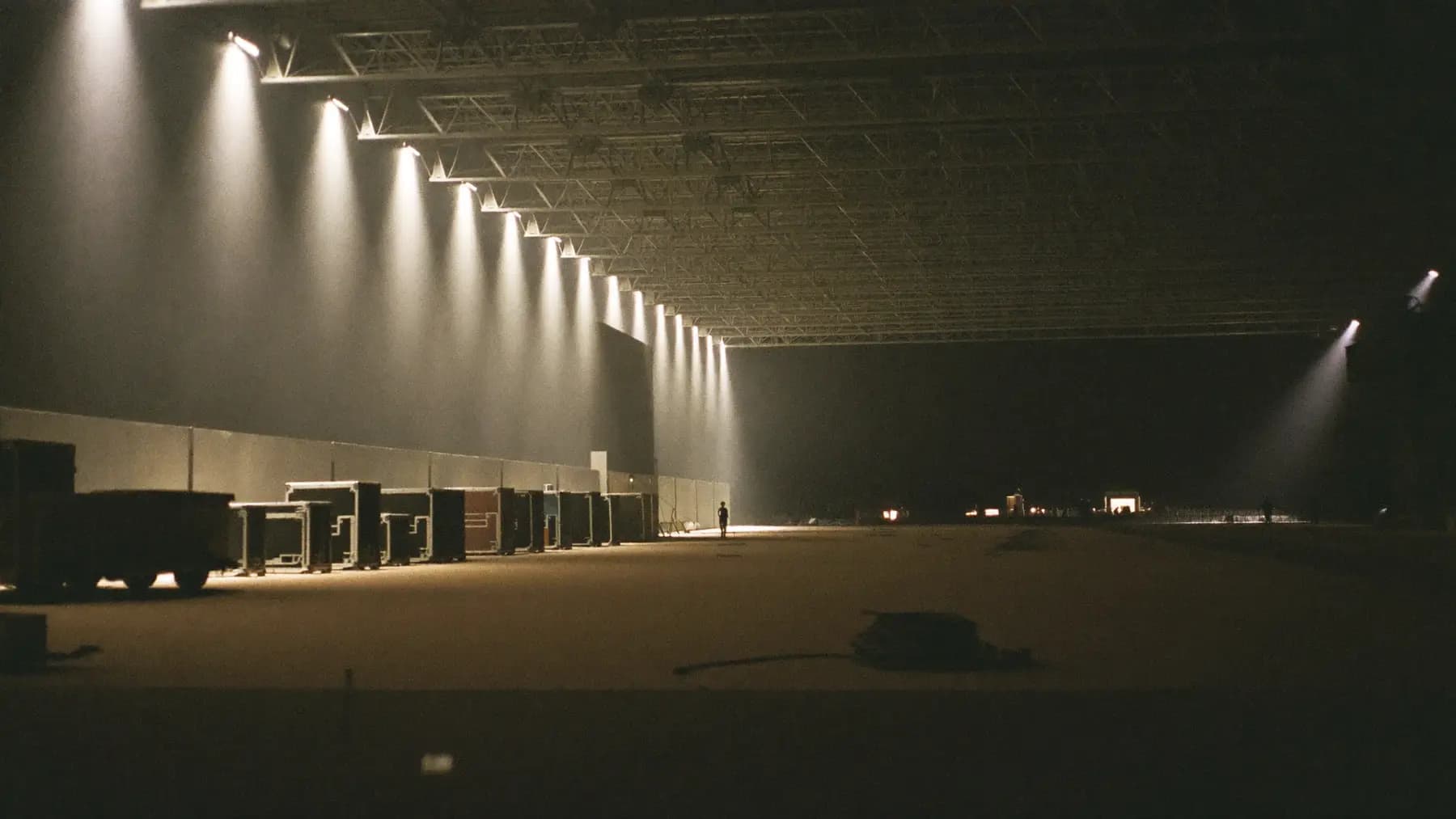
Ask for the loading bay dimensions, the lift dimensions and weight limit, and the exact hours you can work. Then ask what is happening in the room the day before.
A venue with a 22:00 to 06:00 load-in window and a passenger lift as the only vertical route will change your entire kit list and your crew cost. Better to know while you can still choose a different room.
Union or in-house labour requirements belong in this conversation too. Some venues require their own crew for rigging and power, at their rates, on their schedule. That is workable and it is not something to discover on the day.
Rigging and sightlines
Ask for the rigging plan and the point load limits, in writing. Ask which points are actually usable rather than theoretically rated — the two lists differ more often than they should.
Walk the room and sit in the worst seat. Columns, low ceilings and a shallow rake decide screen size and position more than any spec sheet.
Put it in the contract
Everything above is worth having in the venue agreement rather than a friendly email: committed uplink rate, load-in window, power provision, rigging access, and who pays if the venue cannot supply what it described.
The survey is not paperwork. It is the difference between an event with a plan and an event with a series of surprises.
Questions we get
Follow-ups
01How early should the technical survey happen?
Before the venue contract is signed. If that is not possible, the same week it is signed — early enough that the answers can still change the room, the date or the budget. A survey six weeks out is documentation, not a decision tool.
02The venue will not commit to a dedicated circuit. Is that fatal?
No. It means budgeting for bonded cellular as your primary contribution path rather than as a backup, and planning the stream around a lower committed bitrate. It is a cost and a design constraint, not a blocker — but it has to be known before you promise anyone a 1080p multi-camera stream.
03Do we need our own survey if the venue has an in-house AV supplier?
Yes. An in-house supplier knows the room, which is genuinely valuable, and has a commercial interest in the answer. Their survey tells you what they can provide. Yours tells you what your event needs. Both are useful and they are not the same document.
Talk to the team that runs this on the floor
Send the date, the city and the headcount. We reply with numbers.
Further reading

Was this useful?