Event Operations
Why registration queues form — and the four fixes that actually clear them
A registration queue is a throughput problem, not a staffing problem. Three inputs decide it, and only one of them is worth spending money on first.
Hero art direction: Registration hall at 07:40, six lanes with floor decals, delegates mid-queue, staff visible at counters. Shot from balcony height, cool ambient light.
A queue is arithmetic, not bad luck
Three inputs decide whether a queue forms: arrivals per minute, counters open, and seconds per delegate at the counter. If arrivals exceed counters multiplied by throughput, a queue forms. It is that simple, and it is why adding staff to a jammed registration desk usually does nothing.
The trap is that only one of those three is cheap to change.
Arrivals cluster harder than you think
Organisers plan for average arrivals. Delegates do not arrive on average. Across the conferences we have instrumented, roughly 60% of a 3,000-delegate event arrives inside a 90-minute window, and the peak ten minutes can run at three times the mean rate.
If you size counters against the mean, you have designed a queue and simply not noticed yet.
Pull the timestamps from last year's registration system before you decide anything else. One year of real arrival data beats any rule of thumb.
Seconds per delegate is where the money is
Counters scale linearly but need floor space, and floor space near an entrance is the most contested real estate at any venue. Throughput per counter is the input you can actually move:
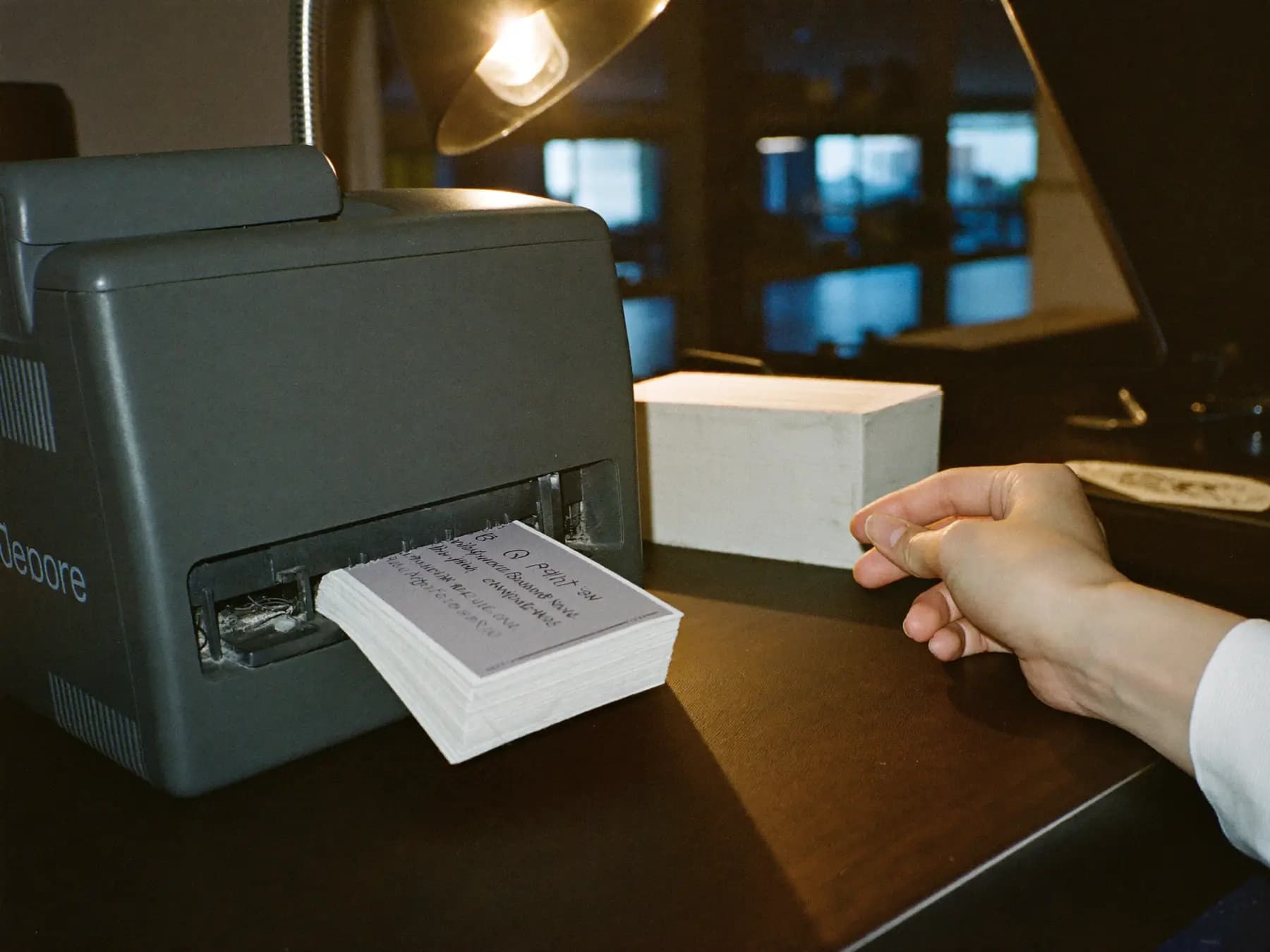
- Pre-printed badges, collected by surname block — around 9 seconds a delegate
- On-demand printing from a QR scan — 20 to 30 seconds
- Name lookup by a human, then printing — 45 seconds and upward
Going from 45 seconds to 9 is a fivefold throughput gain with no extra counters and no extra staff. Nothing else on this list comes close.
The cost is a lead time: badge stock has to be ordered roughly 10 working days out, which means accepting that late registrations become onsite registrations.
The four fixes, in the order they pay off
- Pre-print and sort by surname block. Biggest single win. Fivefold throughput improvement.
- Size counters from the arrival curve, not the headcount. Usually means more lanes than planned for a shorter period, rather than fewer lanes all day.
- Separate the exception desk. One delegate with a payment problem should not stop a lane. Two exception desks handle the 3% that need a human conversation.
- Mark the floor. Queue position decals cut the wandering that makes a 40-metre queue out of a 15-metre one, and they cost almost nothing.
What we do not recommend first
Self-service kiosks look like the obvious answer and rarely are. They move the bottleneck to whoever helps confused delegates, and at Indian conference demographics we consistently measure lower throughput than a staffed counter with pre-printed badges. They earn their place at multi-day events where day-two arrivals are thin and staffing is expensive.
Facial recognition check-in is faster in a demo and slower in a hall, because enrolment has to happen somewhere and lighting at an entrance is rarely kind.
The number to hold people to
Ask any supplier for seconds per delegate at the counter, measured, and the counter count they are proposing. Multiply. If the result does not clear your peak arrival rate, the plan produces a queue no matter how the proposal is worded.
Questions we get
Follow-ups
01How many counters do we need for 2,000 delegates?
It depends entirely on the arrival curve and seconds per delegate. As a working figure: with pre-printed badges at 9 seconds, six counters clear roughly 2,400 delegates an hour. With on-demand printing at 25 seconds, the same six counters clear about 860. Send us your previous registration timestamps and we will model it properly.
02What if the delegate list is still changing the week of the event?
Normal. Badge stock is ordered around 10 working days out, so names can keep moving until then. After that, additions become onsite registrations, which we handle at the exception desk. Expect roughly 5% of a conference to be onsite regardless of how tight the process is.
03Does RFID make check-in faster?
Not at check-in — you still have to hand over a badge. RFID pays off at hall doors, where it reads at 1.5 m without line of sight and moves about 40 delegates a minute through a portal. Use QR at registration and RFID at access control if the budget only stretches to one.
Talk to the team that runs this on the floor
Send the date, the city and the headcount. We reply with numbers.
Further reading


Was this useful?