AI in Events
Four places we tell clients not to use AI at their event
The technology works. That is not the same as it being the right choice for every session, and pretending otherwise costs trust.
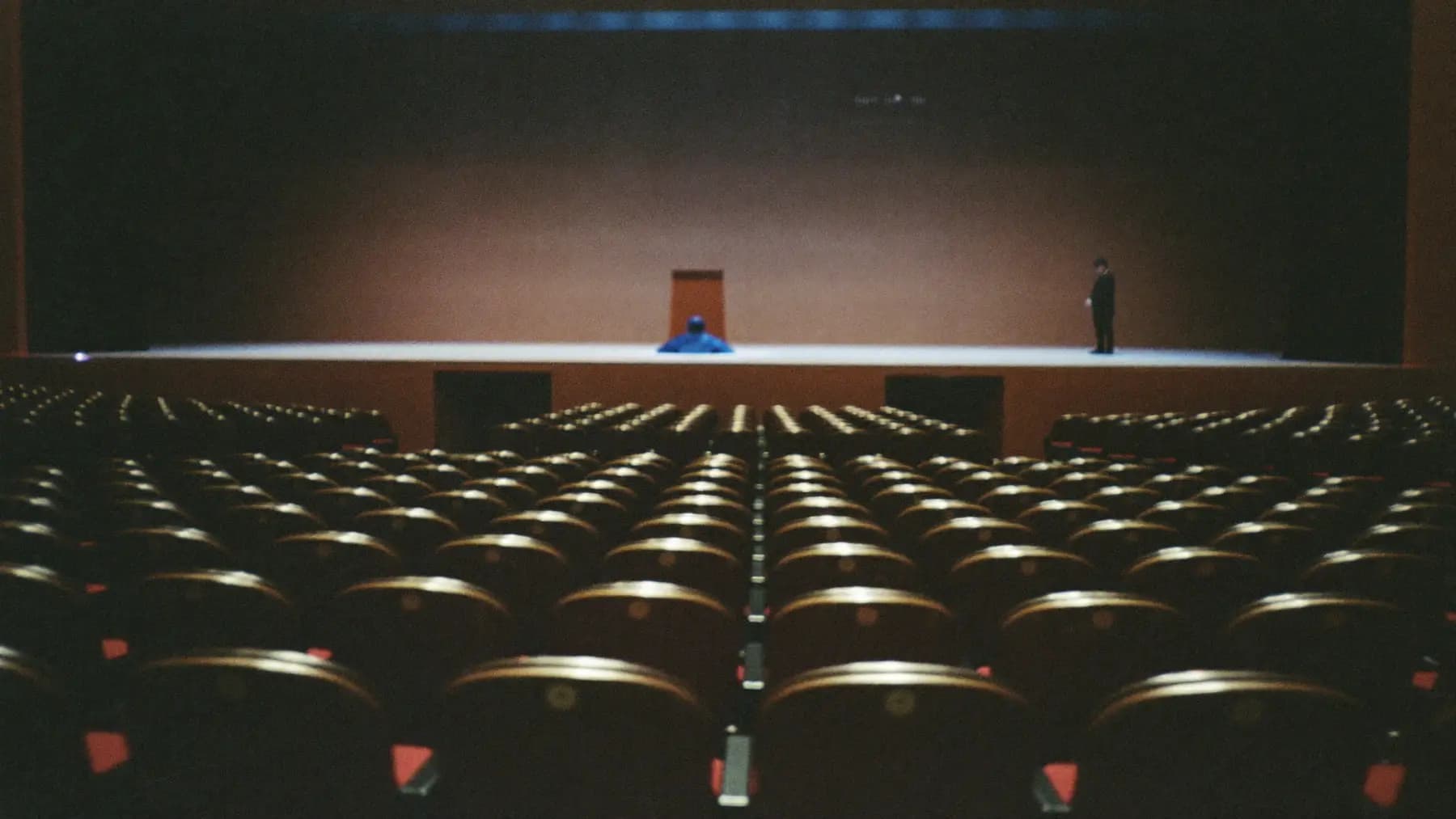
Hero art direction: Empty conference auditorium during rehearsal, seats in the foreground, lit but empty stage in the distance.
Selling the limits is part of selling the capability
We build AI into events for a living, which is exactly why the boundaries matter. A client who discovers the limit themselves, live, in front of their delegates, does not buy again.
Here are the four we raise before anyone signs.
1. Regulated, legal or medical content
Where a mistranslation creates liability, use human interpreters.
This covers clinical sessions where dosing or contraindications are discussed, legal proceedings and arbitration, regulatory briefings, and any session that will be minuted as a formal record. The issue is not average accuracy — machine translation is strong. The issue is that the failure mode is a confident, fluent, wrong sentence, and in these contexts nobody in the room can catch it.
A hybrid works well: human booths on the regulated track, AI dubbing on the parallel tracks that would otherwise have had no language support at all.
2. Anything where the answer is "no"
An automated helpdesk handling refunds, access refusals or complaints produces a frustrated delegate who then has to explain it all again to a person.
Route wayfinding, schedules and connectivity to automation, where the answer is factual and identical every time. Route exceptions, refusals and upset delegates to a human immediately. The handover should be one step, not a negotiation with a bot that keeps offering the FAQ.
3. Published content nobody reviewed
Generated copy that goes live without a human read is the fastest way to put a wrong figure on a page that a prospect then quotes back at you.
Our own page generation pipeline writes to draft and cannot publish. That is a deliberate constraint rather than a missing feature: the value is in the first draft and the structure, and the review is what makes it publishable.
The specific things to check every time: any number, any client name, any claim about a certification or capability, and any statement about what is included in a price.
4. Faces and voices of real people, without consent
Synthetic voice cloning of a speaker, or generated imagery of identifiable attendees, needs explicit written permission — and often is not worth asking for.
For dubbing, a neutral synthetic voice per language is the appropriate default. It is clearly not the speaker, which is the point: the delegate knows they are hearing a translation.
Generated imagery of people has the same issue in a different form. An invented face on a website implies a person who does not exist. Where we use generated imagery, it shows equipment, hands and spaces rather than faces, and it is labelled as generated.
The test we apply
Before automating any step, ask: what does this look like when it is wrong, and who finds out?
If the answer is "the delegate finds out, in the room, and cannot get to a person" — do not automate it. If the answer is "an editor sees it in review" — automate it and keep the review.
Questions we get
Follow-ups
01Is a synthetic voice acceptable for a keynote speaker's dubbing?
A neutral voice in the target language is standard and expected — delegates understand they are hearing an interpretation. Cloning the speaker's own voice into another language is technically possible and needs their explicit written consent. Most speakers decline once they understand what is being asked, which is a reasonable answer.
02How do we tell delegates that AI is being used?
Plainly, in the session listing and on the receiver instructions. 'Live machine translation, provided in addition to human interpretation on the main track' sets the expectation correctly. Delegates are far more tolerant of an occasional error when they were told what they were listening to.
03Does the review requirement make AI content generation pointless?
No — it changes what you are buying. The saving is in structure and first draft, which is most of the elapsed time on a page. Review of a good draft takes a fraction of writing from nothing. What it does mean is that the workflow cannot be measured in pages published per hour with nobody reading them.
Talk to the team that runs this on the floor
Send the date, the city and the headcount. We reply with numbers.
Further reading
Was this useful?