Streaming & Hybrid
Sizing the uplink out of a venue: two numbers, not one
Contribution and distribution are different problems. Confusing them is why streams fail at venues with fast internet.
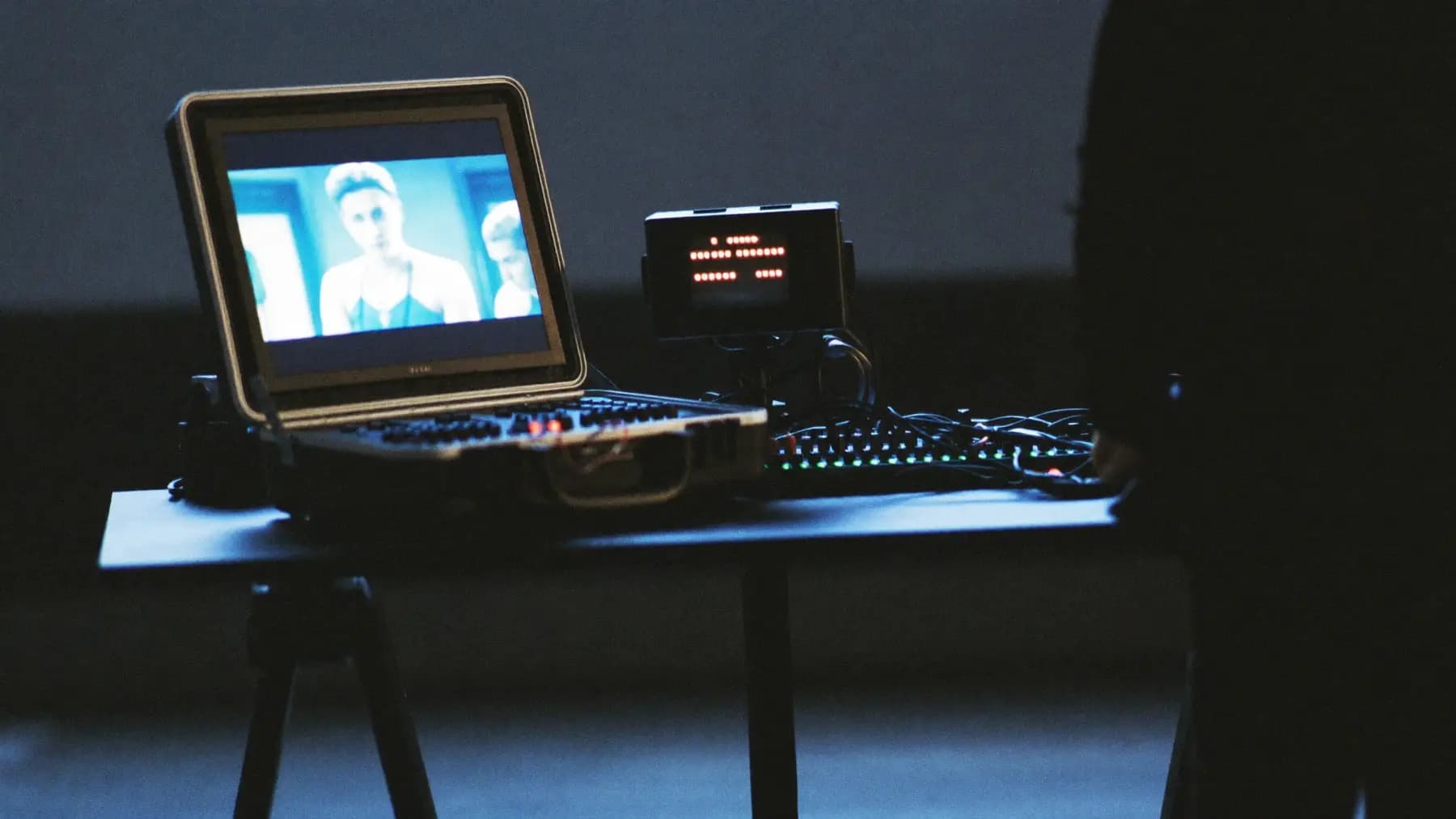
Hero art direction: Open road case with video switcher and encoder, coiled SDI and ethernet, small confidence monitor showing the stage.
The venue's headline speed answers the wrong question
A venue advertising a gigabit connection sounds like a solved problem. It usually is not, for three reasons: the number describes download rather than upload, it is shared with everyone in the building, and it says nothing about stability under load.
What you need out of a venue is a contribution feed — one stream, from your encoder to your streaming platform. What delegates need is distribution, which is the platform's problem and not yours. Sizing one against the other is the most common error in this area.
Contribution: small, and it must never wobble
A single 1080p contribution feed at a sensible bitrate is 6 to 10 Mbps. Add a backup path and a return feed for comms and you are still under 25 Mbps.
That is a small number. Almost any venue can supply it on paper. The requirement that is hard is that it must be continuously available, because a contribution feed that drops for four seconds drops your stream for four seconds in front of everyone watching.
So the specification is not bandwidth. It is:
- A committed rate, in writing, not a best-effort share
- A circuit that is not shared with the delegate Wi-Fi
- A second path from a different carrier, ideally entering the building by a different route
- Static addressing or at least a stable NAT, because some ingest protocols dislike a changing source
Distribution is not your bandwidth problem
If 5,000 people watch your stream, that traffic is served by the platform's CDN from edge nodes near the viewers. None of it passes through the venue.
This matters because it removes a whole category of anxiety. Your venue link does not scale with audience size. A 50-viewer event and a 50,000-viewer event use the same uplink.
What does scale with audience is your CDN bill, which is a budgeting question rather than an engineering one.
What bonded cellular actually buys
Bonding aggregates several mobile connections, usually across different carriers, into one logical link. For event contribution it is close to essential, and not primarily for the bandwidth.
It buys path diversity. The failure you are protecting against is not "the internet is slow", it is "somebody unplugged a switch" or "the venue's single fibre was cut by roadworks". Two entirely separate physical paths is what makes a stream survive that, and cellular is the easiest second path to arrange.
Test it properly: run the event on the backup path during rehearsal. A backup nobody has ever carried live traffic is a hope.
The numbers to put in the plan
For a single-camera 1080p stream with a backup path:
- Committed venue circuit: 25 Mbps up, dedicated
- Bonded cellular: three carriers, 20 Mbps aggregate sustained
- Encoder configuration: 6 Mbps primary, with adaptive fallback to 3 Mbps rather than dropping
For multi-camera or 4K, scale the first two and re-survey — 4K contribution changes the answer materially and should be a deliberate decision rather than a default.
The failure to rehearse
Pull the primary cable during rehearsal, with the stream live to a private endpoint, and watch what happens. Time the failover. If it is not under five seconds and automatic, you have a plan that needs a human to be watching at the exact moment it fails.
Questions we get
Follow-ups
01Can we stream over the venue's guest Wi-Fi?
For an internal, low-stakes stream you can. For anything a client is watching, no — guest Wi-Fi is shared, unmanaged and degrades exactly when the hall fills, which is when your session starts. Use wired for contribution and treat Wi-Fi as a last resort behind bonded cellular.
02What bitrate should we contribute at?
6 to 8 Mbps for 1080p30 of typical conference content — mostly static frames of a speaker and slides, which compresses well. Push higher for high-motion content or if the platform is re-encoding aggressively. Contributing at more than you can sustain is worse than contributing at less.
03Do we need a dedicated circuit if we have bonded cellular?
Ideally both, with the wired circuit primary and cellular as automatic failover. If the venue genuinely cannot supply a dedicated circuit, bonded cellular alone is workable and has carried plenty of events — it just means your redundancy is between carriers rather than between technologies.
Talk to the team that runs this on the floor
Send the date, the city and the headcount. We reply with numbers.
Further reading

Was this useful?