Streaming & Hybrid
Remote attendees leave at eighteen minutes. Design for that
The hybrid audience is not a smaller version of the room audience. Their attention behaves differently and the programme should too.
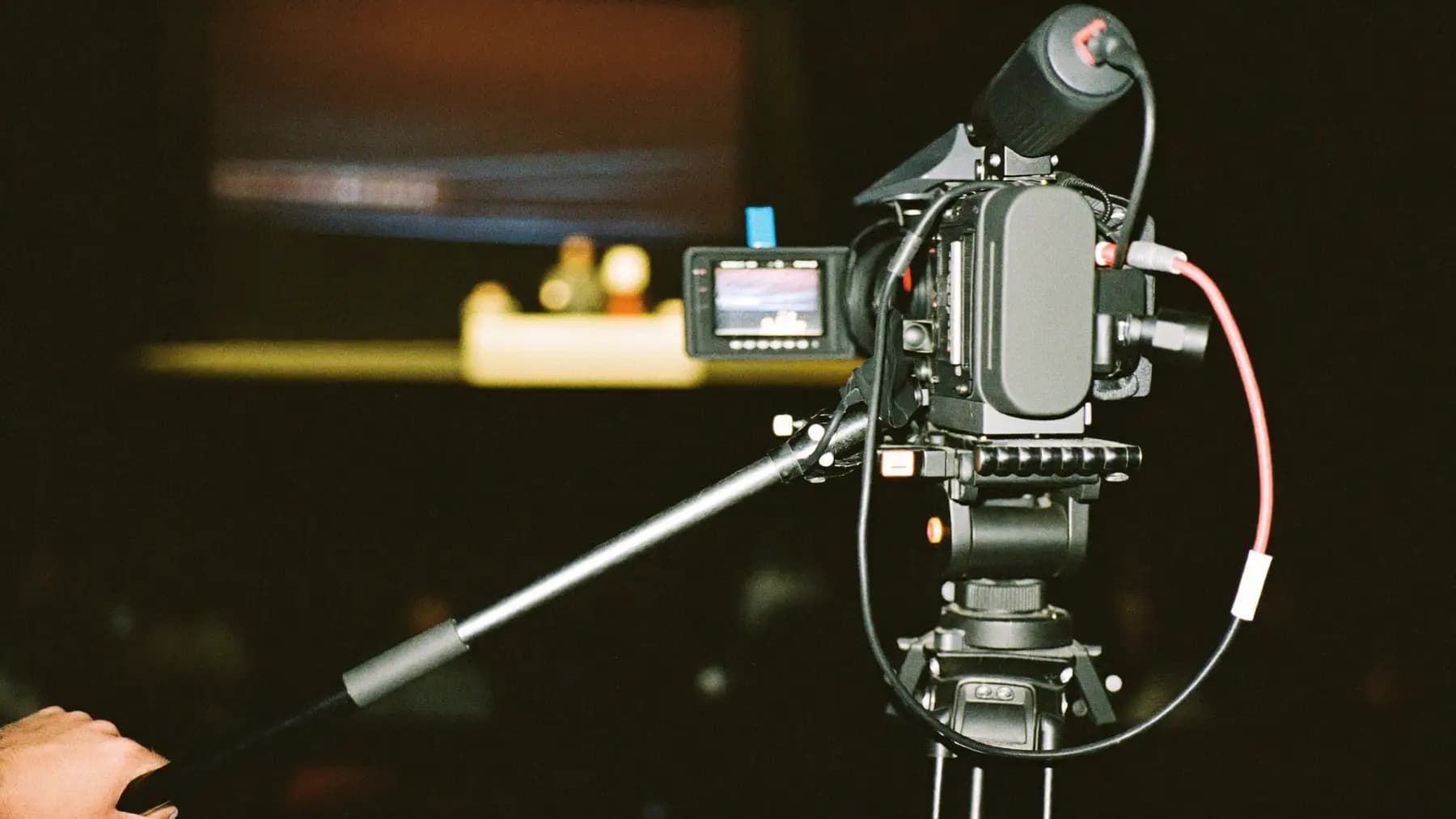
Hero art direction: Broadcast camera on a tripod at the back of a darkened conference hall, operator's hand on the pan bar, stage light distant.
The room is a commitment. The stream is a tab.
A delegate in the hall has travelled, blocked out a day and is sitting among people who will notice if they leave. A remote attendee has a browser tab, an inbox and a meeting at four.
These are not the same audience with different bandwidth. They are different audiences, and a programme designed for the first will lose the second.
What the retention curve looks like
For a standard conference session streamed as-is, the shape we see repeatedly:
- Strong opening minute, near-full attendance
- First meaningful drop at three to four minutes, as people decide whether this is for them
- Steady decline to roughly half by eighteen minutes
- A long, flat tail of genuinely committed viewers
Compare that with the room, where the same session holds nearly everyone to the end because leaving is socially expensive.
The eighteen-minute figure is not a law, but the shape is consistent: hybrid audiences make a stay-or-go decision early and then a second one when the session stops rewarding them.
Four changes that hold the curve
Front-load the substance. The room will sit through five minutes of housekeeping and a speaker introduction. The stream will not. Whatever the session actually promises should start inside ninety seconds.
Cut the sessions, or cut the stream of them. A ninety-minute panel that works in the room is unwatchable remotely. Either shorten it, or stream a curated portion and publish the full recording afterwards.
Give the remote audience something the room does not have. A moderated chat with the speaker answering, a downloadable version of the deck, a poll whose results appear on the room's screen. Something that makes the tab worth keeping open.
Make the camera do work. A single locked-off wide shot is the fastest way to lose people. Cutting between speaker, slides and a reaction shot is not vanity; it is what keeps a video feed feeling live rather than like a security camera.
Measure the right thing
Peak concurrent viewers is the number that goes in the report and it is nearly meaningless. It measures how good your promotion was, not how good the event was.
Better numbers:
- Median watch duration as a share of session length
- Retention at the halfway mark — the honest engagement figure
- Chat or Q&A participation as a share of concurrent viewers
- Return rate across sessions — did the same people come back after lunch
The last one is the strongest signal that the stream is worth producing at all.
Decide honestly whether to be hybrid
Streaming a conference well costs real money: contribution redundancy, a camera operator, a vision mixer, someone moderating chat, and programme changes that constrain the room event.
Streaming it badly costs slightly less money and produces a recording nobody watches and a remote audience that will not return next year.
If the budget only covers a locked-off camera pointed at a stage, the better decision is often to record properly and publish afterwards, and tell people that is what you are doing.
Questions we get
Follow-ups
01Should hybrid sessions be shorter than in-room sessions?
The streamed portion should be. A workable pattern is a 45-minute room session where the first 25 minutes are streamed live and the rest is room-only discussion, with the full recording published later. This respects both audiences instead of compromising for both.
02Is on-demand more valuable than live?
For most conference content, on-demand accumulates more total watch time — but live is what creates the interaction and the sense of an event. Produce for live and publish on-demand from the same feed; the marginal cost of the second is small once the first exists.
03How do we get the room and remote audiences to interact?
Give the remote audience a channel the moderator actually reads on stage, and say so. 'This question came in from someone watching in Bengaluru' does more for remote engagement than any platform feature. It needs a person whose job is watching that channel — assigning it to the AV team means it does not happen.
Talk to the team that runs this on the floor
Send the date, the city and the headcount. We reply with numbers.
Further reading
Was this useful?