Event Operations
Reunification is a process you write before the event, not during it
Separated children, lost delegates and medical incidents all need the same thing: a documented protocol somebody owns.
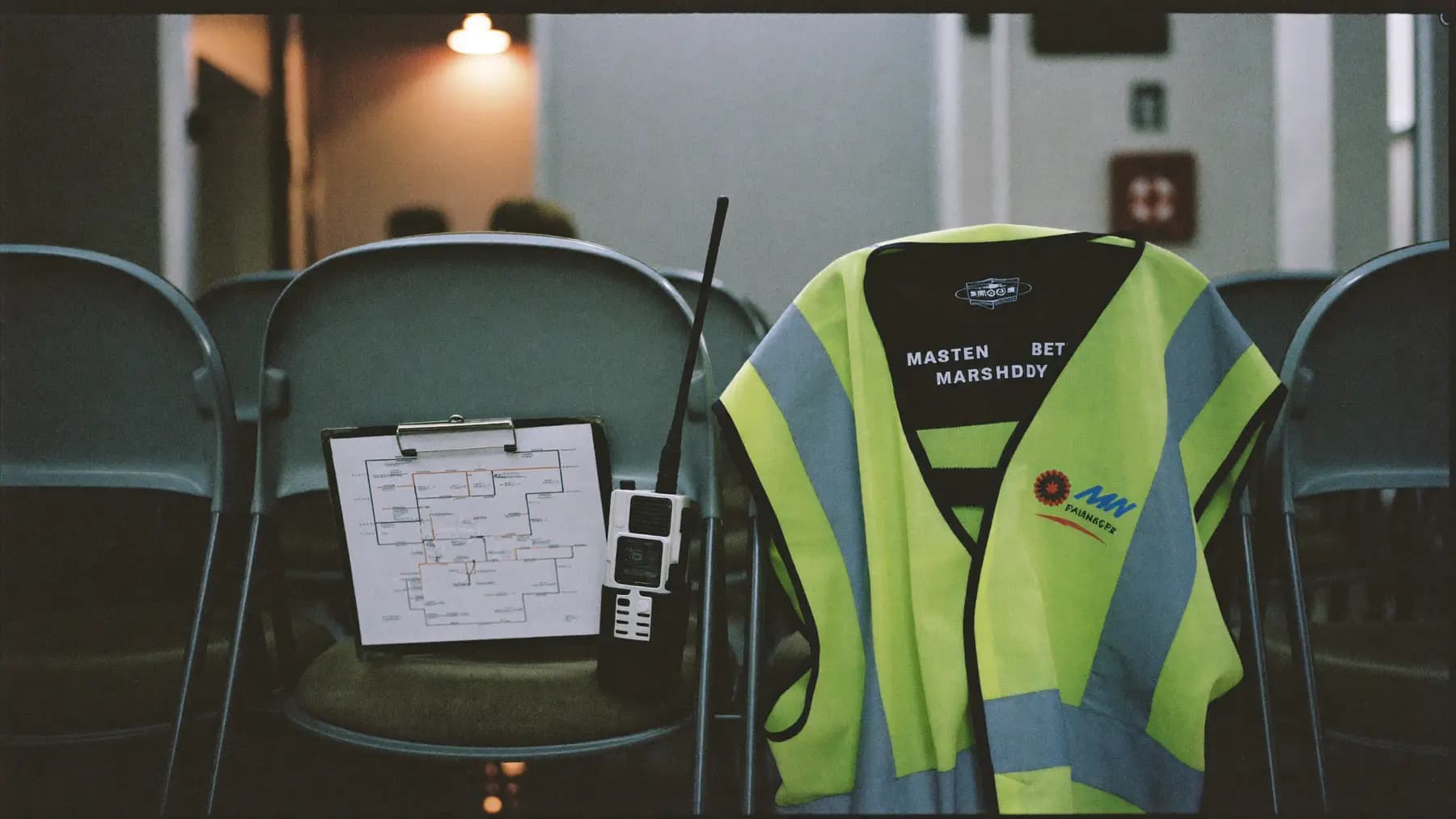
Hero art direction: Crowd-safety marshal position: hi-vis vest on a chair, radio in charging cradle, clipboard with floor plan, first-aid box behind.
The plan you have not written is the plan you will improvise
Most events never need a reunification protocol. The ones that do need it immediately, under pressure, in front of an audience, and with a distressed person waiting.
Improvising at that moment produces the failure everyone remembers: conflicting instructions over the radio, two teams searching the same hall, and nobody controlling the exits.
What the protocol has to answer
Write it on one page and put it in every marshal's pocket. It has to answer, without interpretation:
Who takes the report. One named role, with a radio channel and a phone number. Not "any staff member".
What is recorded. Name, description, what they were wearing, where and when last seen, and the reporting person's contact. A form, not a memory.
Who is told, and in what order. Venue security, event control, then whether the venue's own protocol takes precedence. Many venues have a legal duty and their own procedure, and yours must sit inside theirs rather than compete with it.
What happens to the exits. For a separated child this is the single highest-value action and the one most often delayed. Deciding in the moment whether to control exits costs minutes you do not have.
Where the reunification point is. A specific, staffed, signed location. Not "the help desk", which moves and gets busy.
Who declares it resolved. One person. Searches that end because everyone drifts away are how a second incident starts.
Badging helps more than people expect
If your event includes children, guests or accompanying family, put a contact number on the reverse of their badge. It costs nothing at print time and it resolves a meaningful share of separations before they ever reach a protocol.
For events with a family day or a public component, consider a wristband with a written parent mobile number. Low technology, and it works when the network does not.
The medical path is separate and must be faster
Reunification can take twenty minutes without harm. A medical incident cannot.
Keep the medical escalation on its own radio channel and its own single number. Know before doors open: where the nearest defibrillator is, which entrance an ambulance uses, and who meets it. A crew member posted at the ambulance entrance saves more time than anything that happens inside.
Brief the first-aid location to every staff member, not just marshals. The person a delegate collapses next to is whoever happens to be standing there.
Rehearse the radio call, not the document
A written protocol nobody has said out loud will not survive its first use.
At the crew briefing, run one scenario aloud: someone reports a separated child, and the person holding that role makes the call while everyone listens. It takes four minutes and it is the difference between a protocol that exists and a protocol that works.
Debrief afterwards even when nothing happened. The gap you find in a quiet debrief is the one you do not find at 15:40 on a busy Saturday.
Questions we get
Follow-ups
01Does a small corporate conference need a reunification protocol?
If no under-18s are present and the venue is a single controlled floor, a lost-delegate process is enough. The moment there is a family day, a public component, or a multi-floor venue where someone can genuinely become disoriented, write the full protocol. It is one page.
02Who should own this — us or the venue?
The venue usually has a statutory duty and an existing procedure, so theirs takes precedence. Your job is to know it, brief your crew on it, and make sure your protocol plugs into theirs rather than running in parallel. Two procedures operating simultaneously is worse than either alone.
03Can access-control data help locate someone?
It can narrow the search — a last scan tells you which hall they entered and when. Treat it as one input rather than an answer, because people move between scans, and be clear in your privacy notice that entry data exists and may be used for safety purposes.
Talk to the team that runs this on the floor
Send the date, the city and the headcount. We reply with numbers.
Further reading

Was this useful?